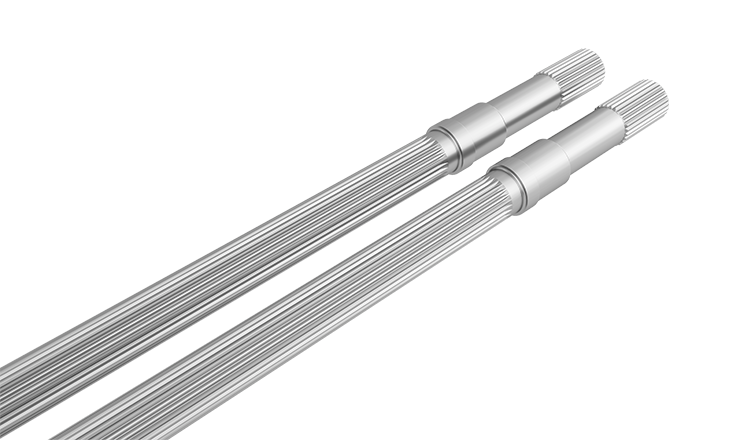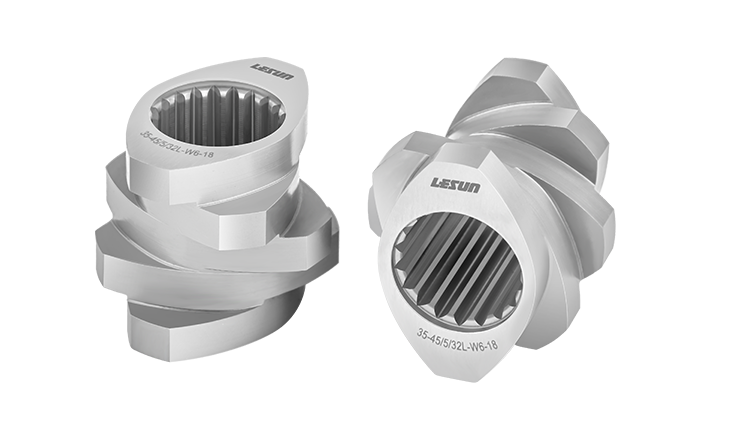
The main part of the extruder screw is an ordinary screw, which can be set in the melting section of the extruder screw or the groove of the metering section, or on the smooth cylindrical surface without a screw groove at the end of the measuring section.
Set according to a certain arrangement, the degree of sparseness and quantity can vary. Cylindrical pins are formed by assembling pins into holes in the extruder screw; square or diamond pins are formed directly milling pins on the extruder screw.
If these pins are set in the melting area, the pins can break the solid bed, destroy the flow of two phases, mix the solid and liquid phases together, increase the contact area between the final solid phase fragments and the compatible materials, and promote melting. If the pin is arranged in the melt conveying area, its main function is to divide the material flow, increase the interface, change the direction of the material flow, and rearrange the flow beam. Multiple shunts and converges to change the direction of flow and homogenize the melt composition and temperature.
The mixing section is an inward slotting structure arranged at the end of homogenization section of an ordinary extruder screw. The outer diameter is equal to the outer diameter of the extruder screw. The groove is divided into several groups, and each group is the confluence area of materials. The material is divided into grooves and rendezvous in the confluence area, and then divided and converged. The principle is similar to pin type.
The separate of extruder screw is characterized by an additional thread (called additional thread) to the melt section in addition to the original screw pattern (called the main screw). The outer diameter of the main thread is slightly smaller than the outer diameter of the main thread. The lead of the secondary thread is different. The secondary thread starts from the end of the feeding section (and is connected to the feeding section here). After several threads, it gradually intersects with the main thread of the homogenization section.
The screw groove depth and thread guide of this extruder screw change gradually from the feeding section to the homogenization end. That is, the thread guide gradually narrows from the width, and the depth of the screw groove gradually becomes shallower from the depth, which can maximize the compression of the material.
Hot-rolled rods are directly used as blanks. Few factories use forged round blanks. Therefore, all defects such as large grains and longitudinal fibers of hot-rolled rods are retained in the finished screw, resulting in irregular deformation of the quenching of the extruder screw and deformation in the use of the finished product, with a low service life.
After the extruder screw is quenched, the bending deformation is corrected by a press. After that, there will be no finishing process. After mechanical correction, the residual internal stress in the screw must be released at a working temperature of 200~300°C, causing the screw to bend again. When working, the screw scrapes or even sweeps the chamber (vibration) in the barrel, worsening the working condition and accelerating the wear of the screw barrel.
After milling and hardening, the extruder screw adopts sand belt polishing, which not only can guarantee the shape and size accuracy of the screw, but also seriously pollutes the production environment and has poor labor conditions. This is a rare backward process in the mechanical industry at present.
Few factories use hoisting between the process of the extruder screw and the storage of finished products. This kind of L/D=12~35 slender rod workpiece should be hoisted and stored, which is the routine of mechanical factories. This artificial extruder screw bending will inevitably significantly reduce the manufacturing and use quality of the screw.
There is no effective means to detect the internal quality and size shape accuracy of the extruder screw: almost no factory has strict detection methods and analysis reports for metallographic analysis, hardness and finishing dimensional shape accuracy after heat treatment.
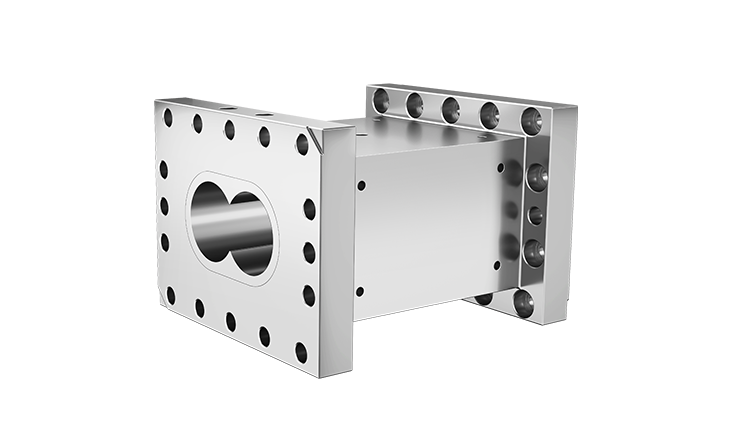
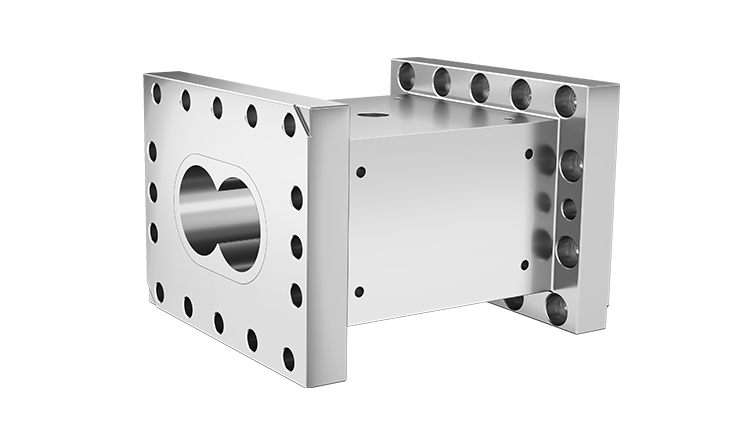
Fully enclosed barrel ensuring stable melting and pressure build-up under high fill and controlled processing conditions.
Best suited for:
Melting sections
Pressure build-up zones
Stable conveying conditions
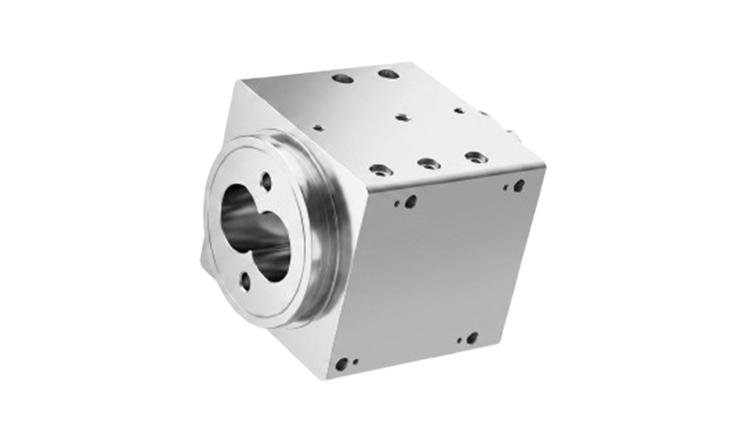
Liquid Injection Barrel | Twin Screw Extruder Dosing Barrel
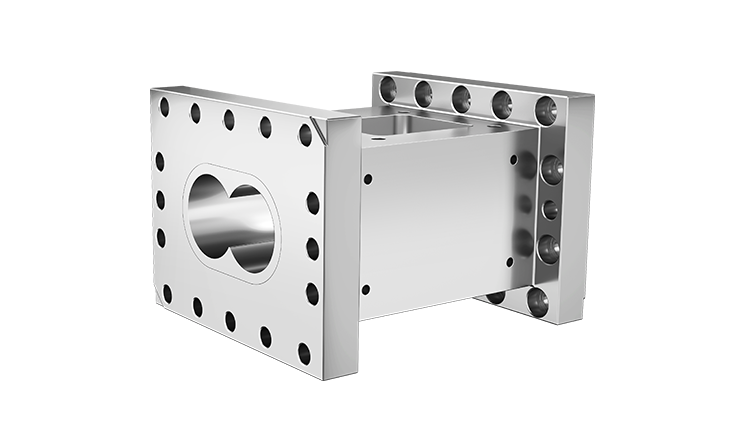
Barrel with vent openings enabling efficient removal of volatiles under controlled partial fill and pressure conditions.
Best suited for:
Devolatilization
Moisture removal
Vacuum venting sections
Precision involute spline ensuring high torque transmission with accurate centering and load distribution.
Best suited for:
High torque extrusion
Engineering plastics
Masterbatch production
Reverse kneading elements introduce backflow and pressure build-up, increasing residence time and enhancing mixing intensity.
Best suited for:
Before venting zones
Degassing preparation
High mixing demand sections

 Knowledge >
 Product Catalog Download >

 Who are we? >
To make it more convenient for you to obtain product quotations, please check and confirm the following information in the box below.