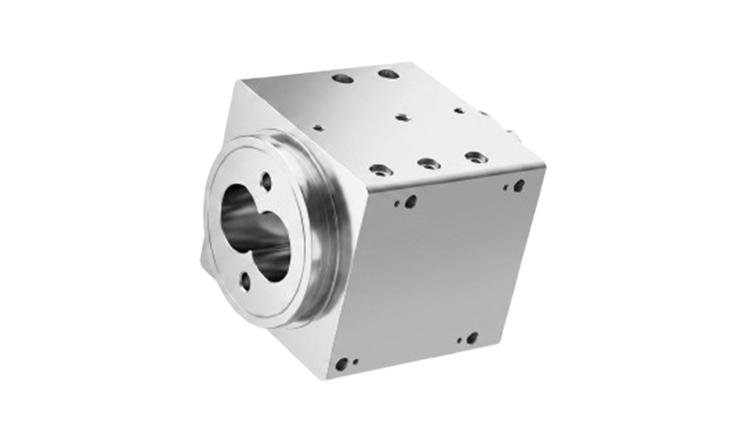


Modular barrel systems give co-rotating twin screw extruders the flexibility to accommodate side feeding, liquid injection, venting and other process functions. The location and number of these ports vary according to formulation requirements and screw configuration.
When a port is not required for a particular process, it is sealed with a barrel blind plug. Although simple in design, this component performs an important sealing function within the barrel assembly. Its dimensional accuracy, material selection and sealing integrity all contribute to process consistency, equipment cleanliness and long-term maintenance performance.
In demanding compounding applications, an improperly fitted or worn blind plug can become a source of melt leakage, contamination and premature component wear.
Unused barrel ports are exposed to the same thermal, mechanical and pressure conditions as the surrounding barrel sections. During continuous production, repeated thermal cycling, fluctuating melt pressure and abrasive formulations place constant loads on the sealing interface.
When the sealing surface begins to wear or dimensional accuracy is lost, operational issues may gradually develop.
Even a small clearance between the blind plug and the barrel housing can allow polymer melt to escape under pressure. Material that accumulates on hot barrel surfaces may eventually degrade, increasing the risk of black specks and product contamination.
Leakage around an unused port may disturb local melt pressure, particularly in high-viscosity or highly filled formulations where stable conveying and pressure development are important.
Formulations containing calcium carbonate, talc, glass fibers or other hard fillers can accelerate wear at the sealing interface. As clearances increase, both sealing performance and component service life are reduced.
Removing degraded material around feed, vent or injection ports often requires unplanned cleaning or production stoppages. In many cases, preventing leakage is significantly less costly than repeated maintenance.
Each barrel port is exposed to different processing conditions and wear mechanisms. Selecting the appropriate blind plug requires consideration of both the application and the operating environment.
Unused side feeder openings may experience direct exposure to abrasive formulations. Abrasive wear resistance is generally the primary design consideration.
Atmospheric and vacuum vent sections are repeatedly subjected to heating and cooling cycles. Dimensional stability is essential for maintaining sealing performance throughout long production campaigns.
Ports used for liquid additives or reactive chemicals may be exposed to corrosive media. In these applications, corrosion resistance is often more critical than maximum hardness.
Because operating conditions differ from one barrel section to another, a single material is not always the most effective solution.
Material selection should be based on the dominant wear mechanism rather than hardness alone.
Heat-treated tool steels are suitable for general polymer compounding applications where wear levels are relatively moderate.
Wear-resistant alloy systems are preferred for formulations containing highly abrasive mineral fillers or glass fibers, where mechanical wear is the primary failure mode.
Corrosion-resistant materials are recommended for fluoropolymers, halogen-containing compounds and chemically aggressive additives that may attack conventional tool steels.
Matching the material to the processing environment helps extend component service life while reducing maintenance frequency.
Although physically small, a barrel blind plug performs an important sealing function within the modular barrel assembly. Its effectiveness depends not only on material selection but also on manufacturing accuracy.
Key engineering considerations include:
Precision-machined sealing surfaces
Tight dimensional tolerances for OEM compatibility
Stable heat treatment to minimize distortion
Material compatibility with adjacent barrel components
Consistent interchangeability during maintenance and replacement
These factors help minimize melt leakage while simplifying installation and reducing downtime.
Unused barrel ports should be considered active components of the extrusion system rather than inactive openings.
Whether sealing a feed port, vent port or liquid injection port, the blind plug should be selected according to the processing conditions, wear mechanism and maintenance objectives of the production line.
Selecting the appropriate blind plug for each barrel section helps minimize melt leakage, maintain process cleanliness and reduce unplanned maintenance throughout the service life of the extrusion system.
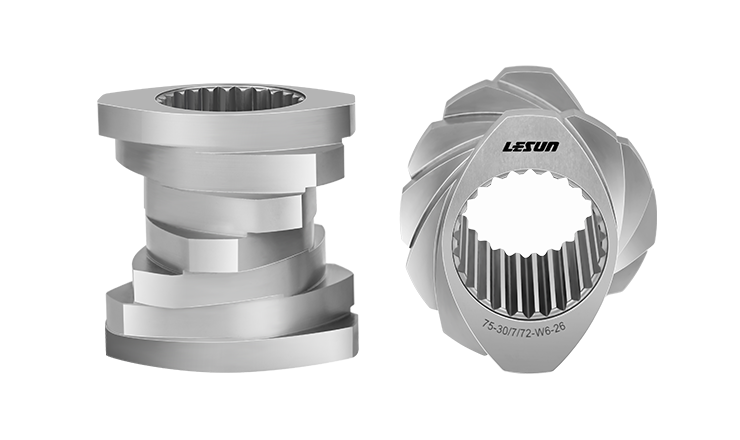
Forward kneading elements provide a balance between conveying and mixing, with adjustable shear depending on stagger angle and disc width.
Best suited for:
Plastication zones
General compounding
Controlled mixing processes
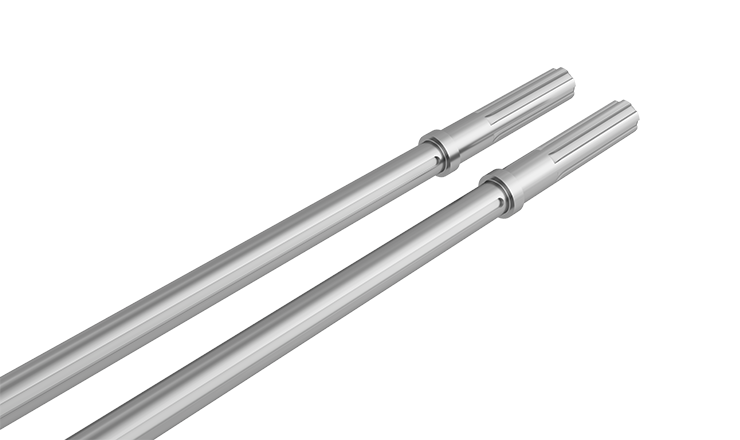
Simple keyed design for basic torque transmission in low-load extrusion systems.
Best suited for:
Low torque applications
Legacy extruders
PVC processing
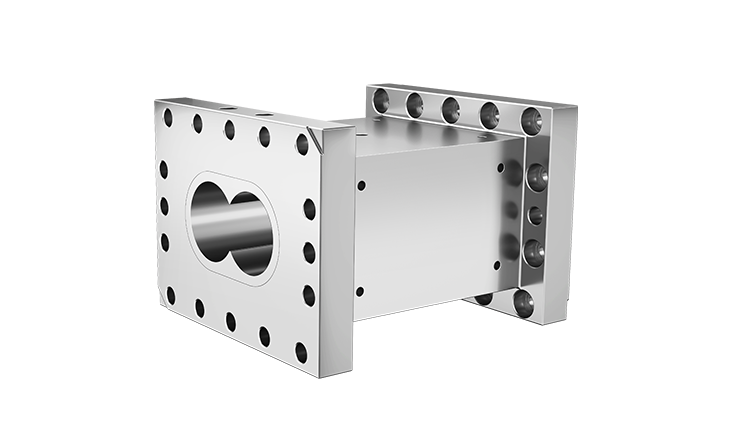
Fully enclosed barrel ensuring stable melting and pressure build-up under high fill and controlled processing conditions.
Best suited for:
Melting sections
Pressure build-up zones
Stable conveying conditions
Robust rectangular spline design providing stable torque transmission with moderate load capacity.
Best suited for:
Medium torque systems
Chemical processing
Replacement applications
Double flight conveying elements are the most widely used design in twin screw compounding. They provide the best balance between free volume and torque transmission.
Best suited for:
Feeding sections
Venting zones
Pressure control sections

 Knowledge >
 Product Catalog Download >

 Who are we? >
To make it more convenient for you to obtain product quotations, please check and confirm the following information in the box below.