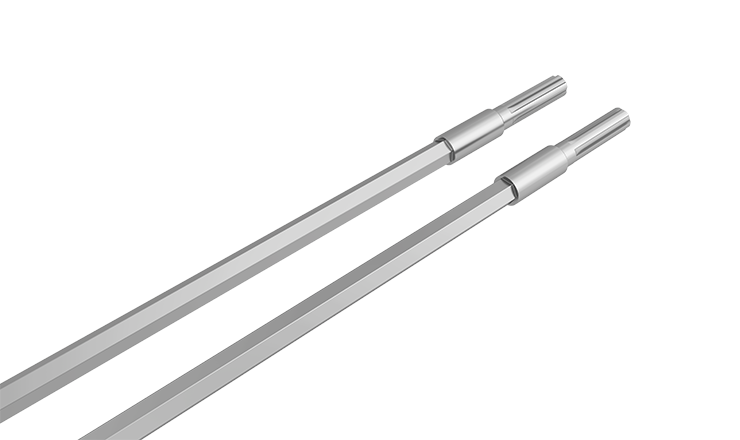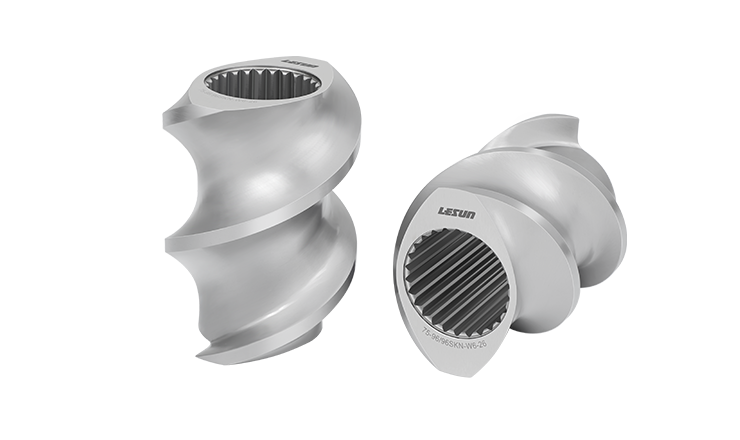


High filler materials such as CaCO₃ and glass fiber place unique demands on twin-screw extrusion systems.
While wear is often the most visible issue, the root challenge lies in how screw elements are configured to manage shear, dispersion, and mechanical load.
This article focuses on how to design screw elements specifically for high filler applications.
When designing screw configurations for high filler systems, three objectives must be balanced:
Achieve sufficient dispersion
Minimize mechanical wear
Maintain stable processing conditions
A common misconception is that better dispersion requires higher shear.
In reality:
Excessive shear often increases wear without significantly improving dispersion.
Recommended approach:
Use moderate shear kneading blocks
Avoid aggressive forward-staggered configurations
For high filler systems, distributive mixing is often more important than dispersive mixing.
Benefits:
More uniform filler distribution
Lower localized stress
Reduced wear
Instead of stacking identical elements:
Alternate conveying and mixing sections
Distribute mixing zones לאורך the screw
Avoid stress concentration
Even with optimized design, material selection remains critical.
Recommended:
High chromium alloys
PM tool steels
Nickel-based materials (for corrosive systems)
Different systems require different strategies:
CaCO₃ → focus on abrasion resistance
Glass fiber → reduce fiber breakage + wear
High loading → reduce shear peaks
Designing screw elements for high filler applications is not about maximizing mixing intensity—it is about balancing performance and durability.
A well-designed screw configuration can:
Extend equipment lifetime
Improve product consistency
Reduce overall operating cost
WhatsApp: 8613605142173
Mail: sales@lesunscrew.com
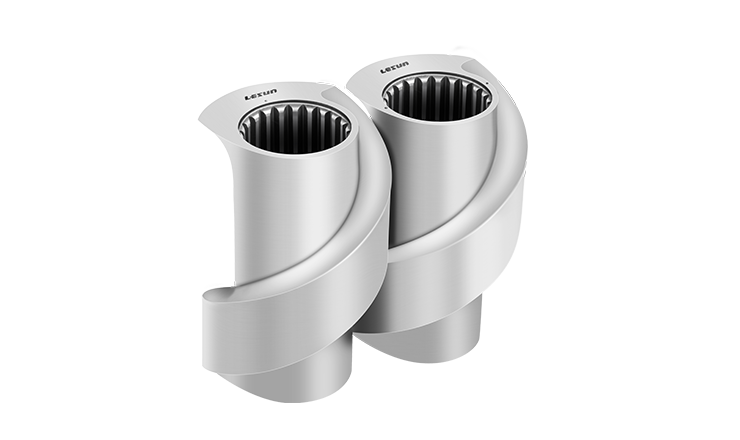
SSK conveying elements combine the strong conveying ability of single flight elements with increased free volume.
Best suited for:
Difficult-to-feed materials
Low-density powders and fillers
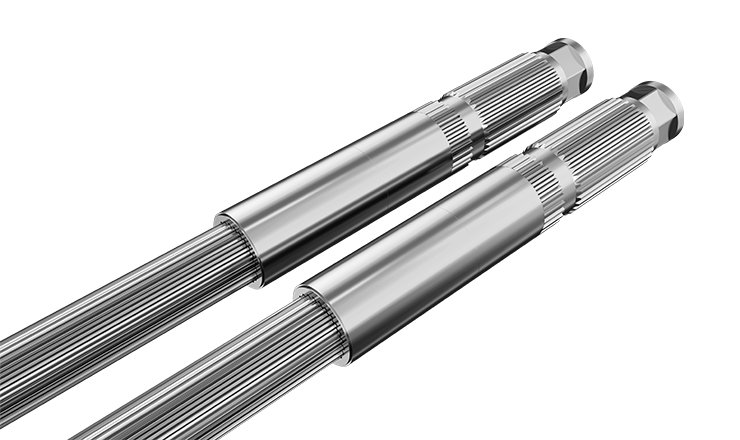
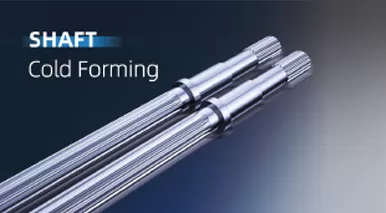
Cold-Forming high-torque shaft with improved strength and fatigue resistance for demanding extrusion conditions.
Best suited for:
High torque extrusion systems
High filler compounding
Continuous high-load production
Simple keyed design for basic torque transmission in low-load extrusion systems.
Best suited for:
Low torque applications
Legacy extruders
PVC processing
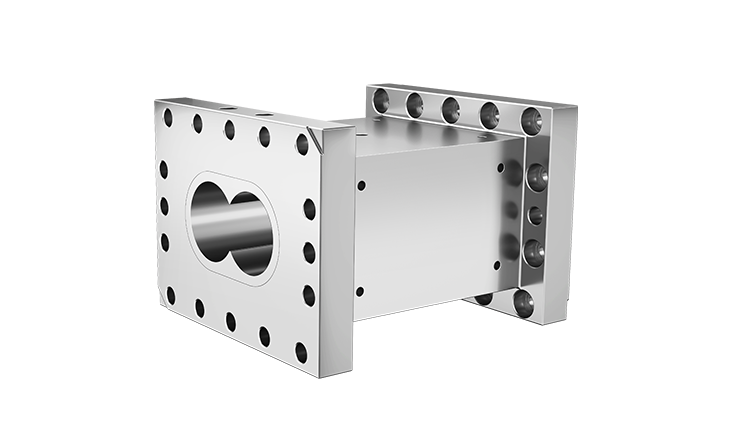
Fully enclosed barrel ensuring stable melting and pressure build-up under high fill and controlled processing conditions.
Best suited for:
Melting sections
Pressure build-up zones
Stable conveying conditions
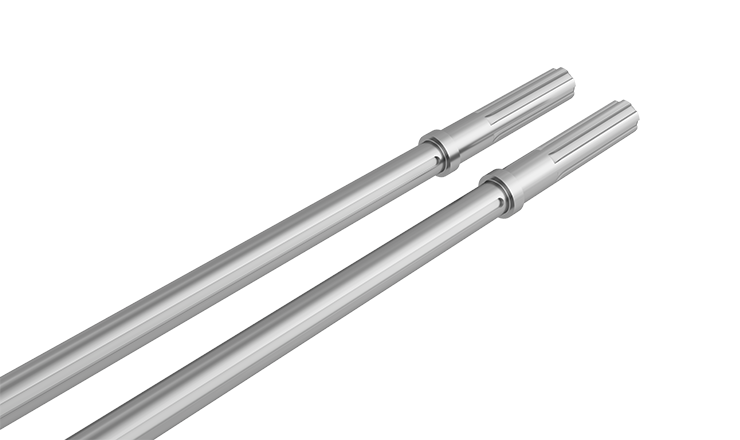
Six-sided geometry enabling uniform torque transfer and rapid screw element replacement.
Best suited for:
Powder coating
Frequent material changes
Fast screw configuration changes
Transition elements are designed to connect different screw element geometries while minimizing dead zones and material retention.
Best suited for:
Transition between single and double flight elements
Connection between SK and standard conveying elements
Geometry change zones within complex screw configurations

 Knowledge >
 Product Catalog Download >
 Who are we? >
To make it more convenient for you to obtain product quotations, please check and confirm the following information in the box below.