

The food and pet food industries represent the expansion of twin-screw extrusion technology toward ultra-high hygiene standards, broad material adaptability, and precise nutritional processing. The core objective goes beyond material shaping to include protein texturization and fibrillation, encapsulation of flavor compounds, and preservation of nutritional components through controlled shear, thermal history, and mixing. This demands that core components supplied by equipment manufacturers not only satisfy basic mechanical strength and wear-resistance requirements, but also achieve top-tier performance in material safety, hygienic design, and process-module flexibility.

In the food and pet food industries,twin-screw extrusion requirements center on safety, gentle processing, and adaptability. The industry must strictly comply with global food safety regulations such as EHEDG and FDA, with all product-contact components meeting food-grade standards and offering full traceability. From a process perspective, the system must effectively handle materials ranging from low bulk density flours and starches to high-protein formulations, enabling protein texturization, microencapsulation, and cereal expansion. At the same time, gentle processing of heat-sensitive ingredients, such as vitamins and probiotics, is essential to prevent nutrient degradation and excessive shear. Typical applications include cereal snacks, pet treats, expanded foods, and plant-based protein extrusion.
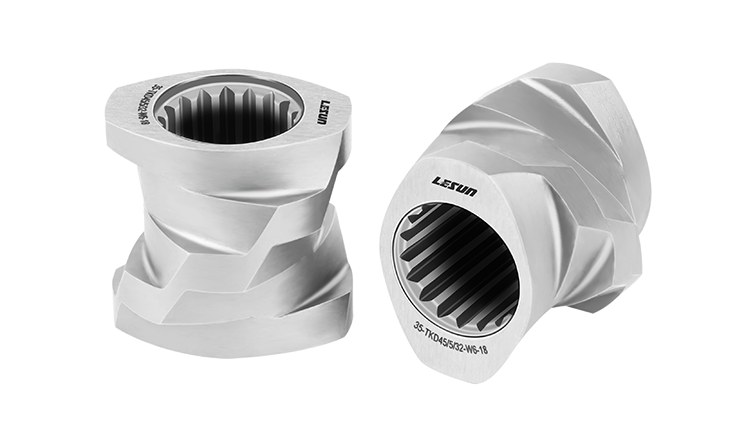
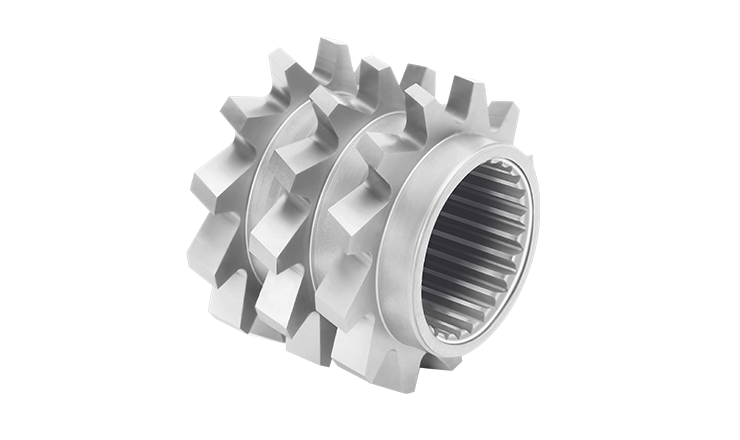
The primary design objective of screw elements is to achieve efficient and gentle mixing and conveying. For typical low bulk density powders in this industry, such as flour and protein powders, large-pitch and deep-channel designs are employed to significantly increase free volume and improve initial feeding performance. To meet stringent hygiene standards, element surfaces are polished to food-grade smoothness and incorporate self-cleaning screw profiles, that eliminate material dead zones and facilitate rapid product changeover and cleaning. Materials are selected from wear-resistant alloys certified for food contact to withstand abrasion from cereals and mineral fillers, while maintaining long-term chemical stability during continuous operation.
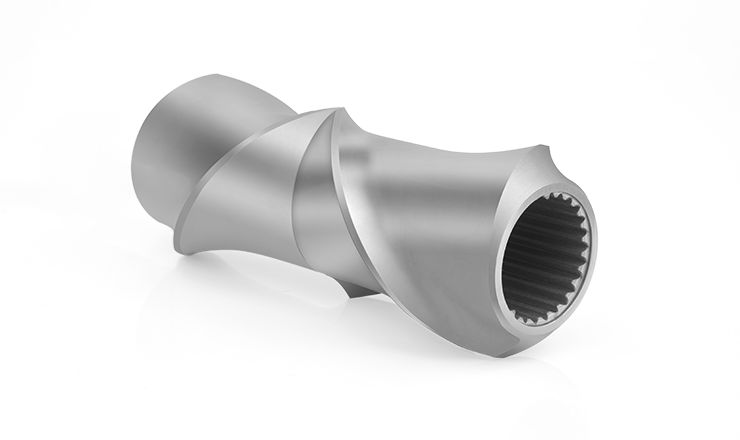
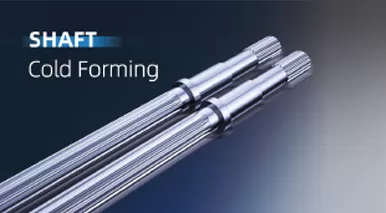
The screw shaft is fundamental to ensuring stable operation at high production rates. To match the characteristics of food extruders operating at rotational speeds up to 1,800 rpm and specific torque levels reaching 11.3 Nm/cm³, the screw shaft is designed with exceptionally high torsional rigidity and strength to withstand the substantial loads generated during the processing of high-viscosity protein melts. Under conditions involving high-moisture materials, such as HMMA with moisture content exceeding 50%, or frequent cleaning with detergents,shaft materials and surface treatments are selected to ensure excellent corrosion resistance. In addition, precision manufacturing and superior dynamic balance are critical for smooth operation, reducing vibration and noise, which benefits both the production environment and long-term equipment service life.
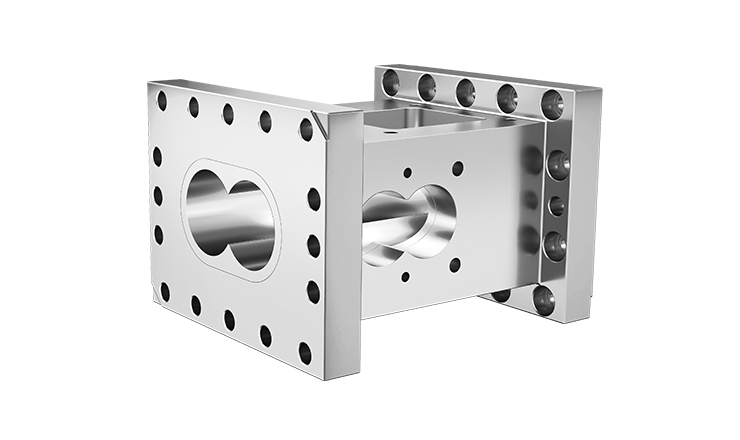
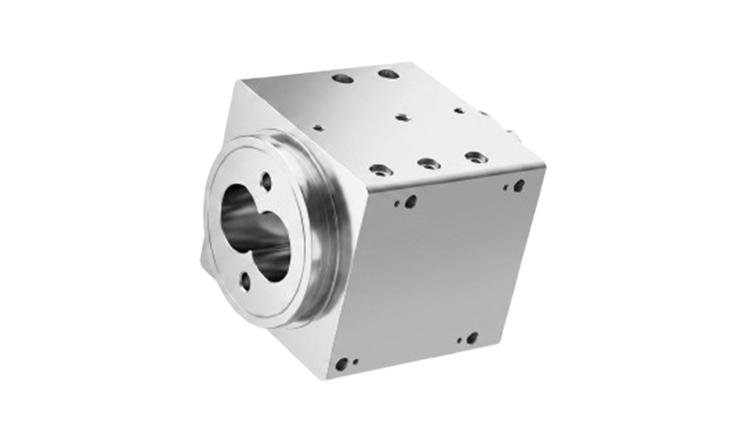
As the process vessel in direct contact with the material, the barrel places paramount importance on hygiene, modularity, and precise temperature control. The entire barrel is manufactured from food-grade stainless steel, with highly polished inner surfaces and a dead-zone-free design. Its modular structure allows flexible configuration for different processes, such as dry or wet extrusion, including the integration of multiple liquid injection ports or vacuum degassing sections. Precise multi-zone independent temperature control is critical for achieving reactions such as starch gelatinization and protein denaturation, requiring rapid heating and cooling response and accurate temperature regulation to ensure optimal product texture and nutrient retention.
Integrated barrel combining feeding and venting functions to optimize space and enhance process flexibility.
Best suited for:
Compact configurations
Combined feeding and venting
Flexible process layouts
Stretching elements, also called S-type elements, improve material exchange and distributive mixing in partially melted zones.
Best suited for:
Semi-plasticized material zones
Improved dispersion
Gentle mixing processes
ZME elements combine reverse conveying structure with forward teeth, creating intensive cutting and recombination of melt flow.
Best suited for:
High mixing intensity applications
Difficult-to-disperse materials
High-performance compounding
CKE elements combine conveying and mixing functions, providing gentle material exchange with low shear and reduced energy consumption.
Best suited for:
Heat-sensitive materials
Low-shear compounding processes
Applications requiring stable conveying with mild mixing
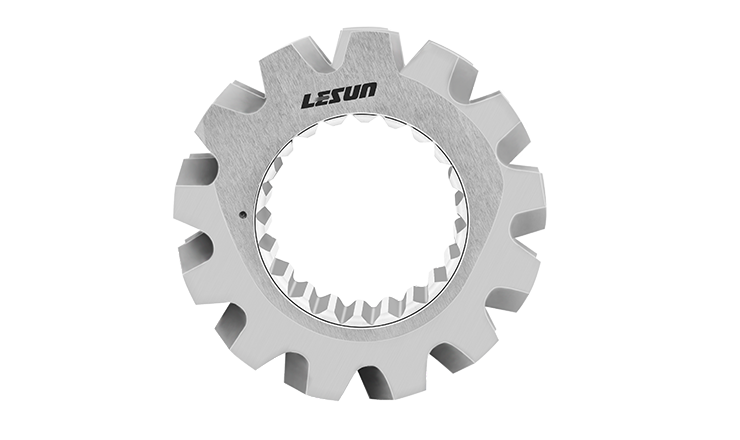
TME elements use intermeshing toothed discs to split and recombine melt flow, achieving efficient distributive mixing without conveying.
Best suited for:
Melt mixing zones
Fiber-reinforced materials
High homogeneity requirements

 Knowledge >
 Product Catalog Download >
 Who are we? >
To make it more convenient for you to obtain product quotations, please check and confirm the following information in the box below.