Screw configuration is the single most critical factor determining the performance of any twin screw extruder. A well-designed screw assembly directly impacts throughput, mixing quality, energy consumption, and product consistency. Understanding how individual screw elements function and interact is essential for optimizing extrusion processes across polymer compounding, masterbatch production, and reactive extrusion applications.
Feeding and Conveying Fundamentals
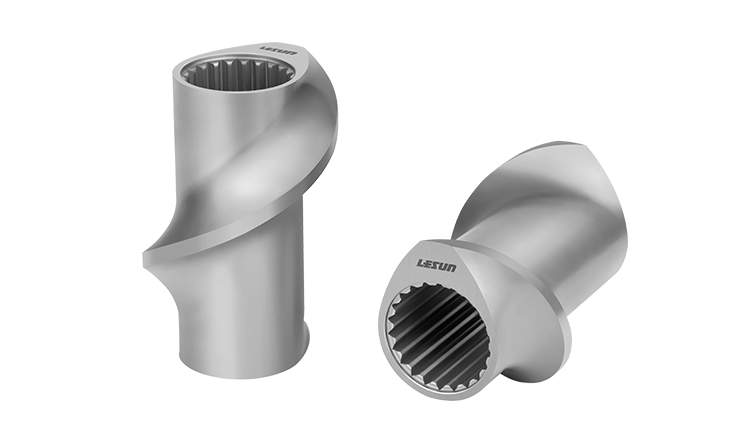
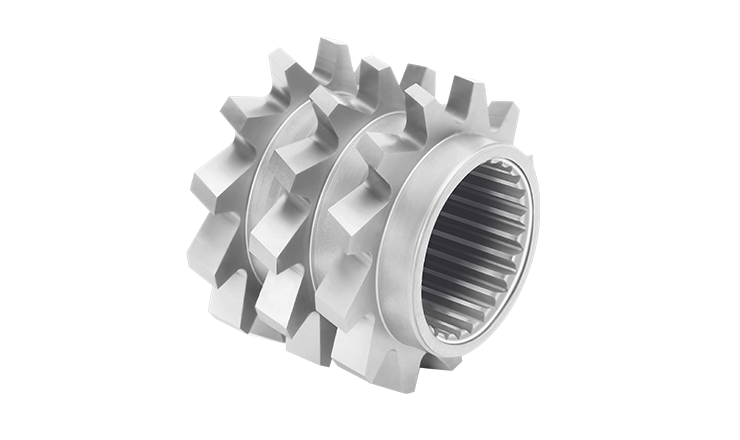
The upstream section of a twin screw extruder relies primarily on Conveying Screw Elements to transport raw materials from the feed throat into the processing zones. These elements feature helical flights with varying pitches — larger pitches maximize volumetric intake capacity, while smaller pitches build compression and pressure. Proper conveying element selection ensures stable feeding, prevents bridging in the feed zone, and maintains consistent fill levels downstream. For low-bulk-density powders or fibrous materials, deep-channel conveying elements with optimized flight geometry can improve intake efficiency by 20–30%.
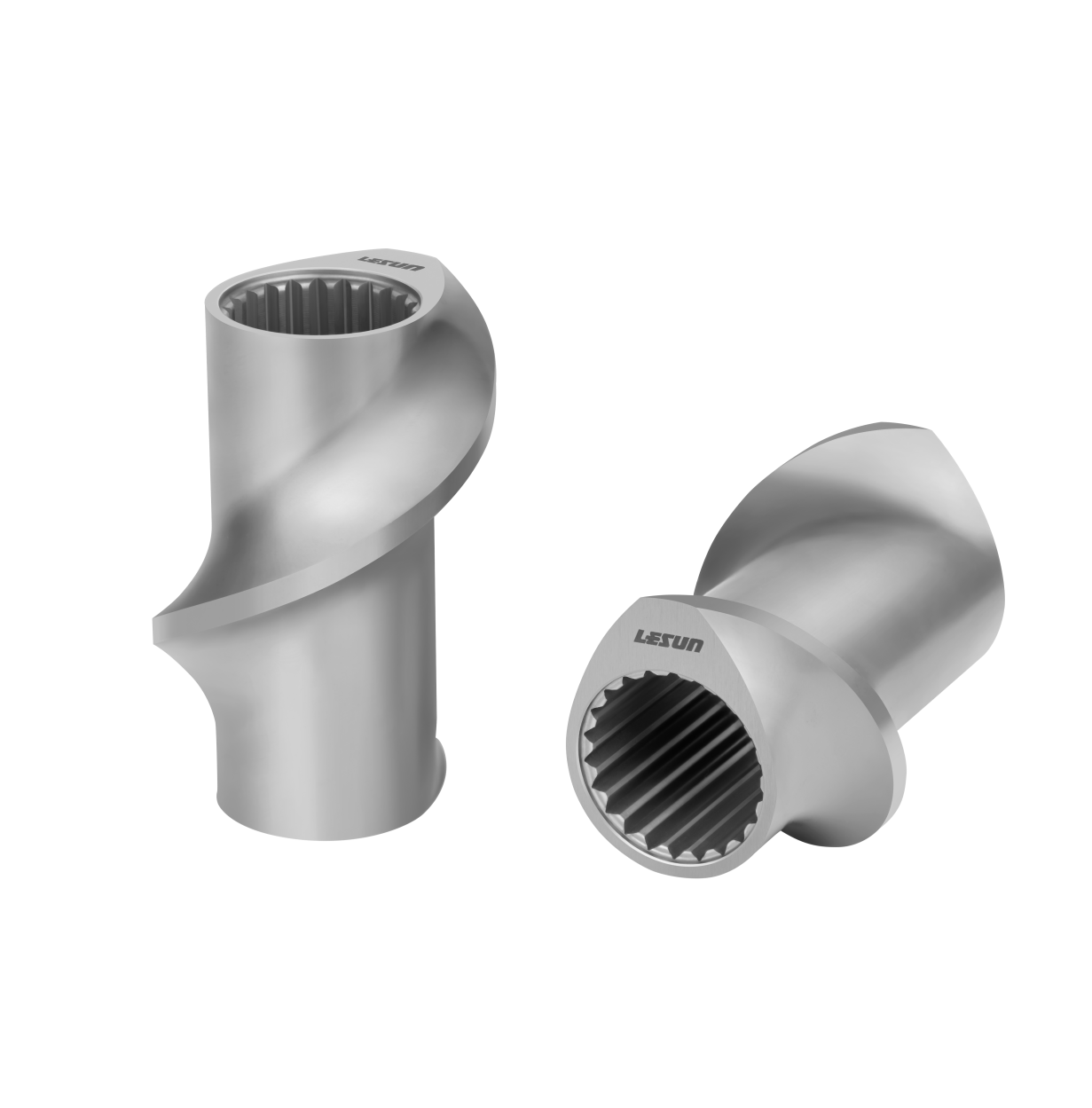
Figure 1: Conveying Screw Elements — Essential components for stable material transport in twin screw extruders
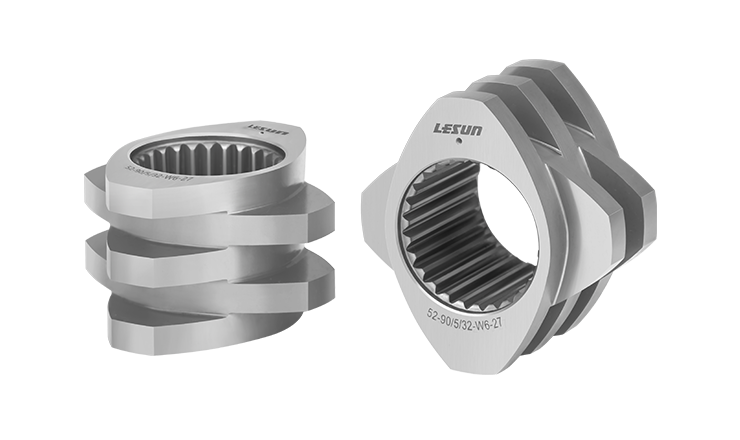
Once materials enter the melting and mixing zones, Kneading Screw Elements take center stage. These staggered-disc components generate controlled shear forces that break down agglomerates, disperse additives, and homogenize polymer melts. The disc staggering angle — typically 30°, 45°, 60°, or 90° — directly governs mixing intensity: wider angles produce higher shear for dispersive mixing of pigments and nanofillers, while narrower angles favor distributive mixing with gentler thermal exposure. Strategic placement of kneading blocks between conveying sections allows processors to tune residence time, pressure build-up, and specific mechanical energy input precisely.
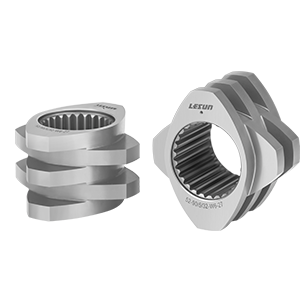
Figure 2: 90° Neutral Kneading Block — Composed of five kneading discs with 180° offset angles for strong dispersion and distribution ability
An optimized screw configuration balances Conveying Screw Elements and Kneading Screw Elements along the Screw Shaft to match material requirements. For example, a typical compounding sequence begins with large-pitch conveying elements for high-capacity feeding, transitions to kneading blocks for melting and dispersion, and concludes with reverse-conveying or pressure-generating elements for stable die extrusion. This modular "building block" approach enables rapid reconfiguration when switching between formulations, minimizing downtime and scrap rates.
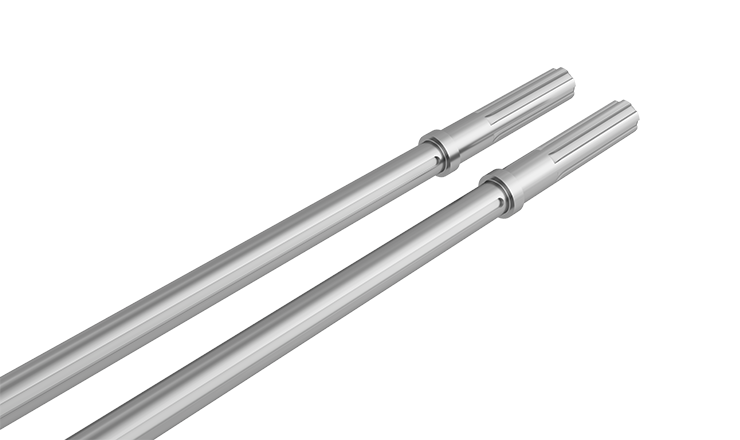
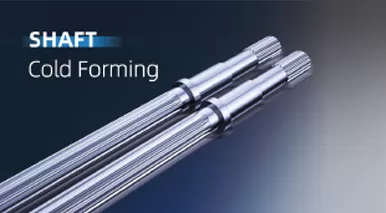
The Screw Barrel provides the processing environment where screw elements operate. Its internal geometry, temperature control zones, and venting ports must align with the screw configuration to achieve optimal heat transfer and degassing. Meanwhile, the Screw Shaft must withstand high torque loads while maintaining precise intermeshing clearances. Any wear or misalignment in the shaft assembly compromises the self-wiping action between screws, leading to material stagnation and degraded product quality.
Modern twin screw extruder systems often incorporate Side Feeder units to introduce secondary materials — such as fillers, fibers, or liquid additives — at specific barrel positions. The screw configuration upstream of the side feeder must ensure complete polymer melting before secondary injection. Large-pitch Conveying Screw Elements installed before the side feed zone maintain adequate throughput while preventing overfilling. Downstream, Kneading Screw Elements blend the side-fed materials into the molten matrix, achieving uniform dispersion without thermal degradation.
1.Feeding Zone: Use large-pitch Conveying Screw Elements (typically 2D pitch) to maximize intake capacity for premixed materials.
2.Melting Zone: Install three-flight screw elements to improve melting temperature and speed, ensuring complete plasticization before downstream processing.
3.Mixing Zone: Deploy Kneading Screw Elements with 45° or 60° staggering angles for balanced dispersive and distributive mixing.
4.Side Feeding Zone: Position large-pitch conveying elements before the Side Feeder to maintain capacity and prevent overfilling.
5.Pressure Build-Up Zone: Use single-flight conveying elements to shorten the pressure section, lower melt temperature, and stabilize vacuum venting.
Choosing the right screw configuration for your twin screw extruder is not merely a matter of component selection — it is a strategic process optimization decision. By carefully balancing Conveying Screw Elements for stable material transport and Kneading Screw Elements for intensive mixing, manufacturers can achieve higher throughput, superior product quality, and reduced energy consumption. At Lesun, we engineer precision screw elements and complete extrusion solutions tailored to your specific process requirements, helping you unlock the full potential of your twin screw extrusion system.
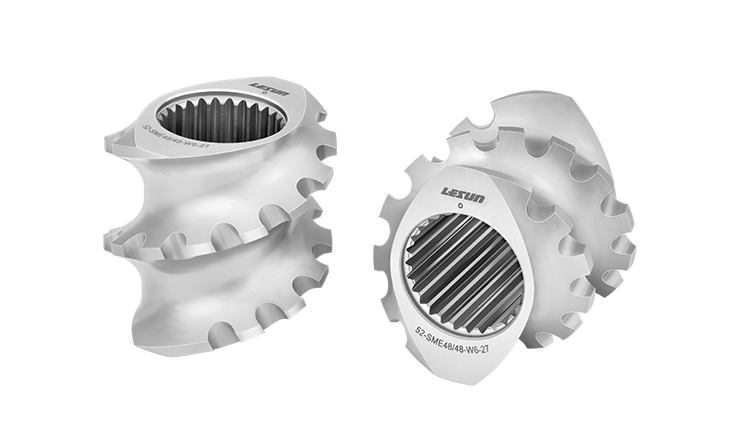
SME elements introduce shallow reverse grooves on conveying flights, generating controlled melt backflow and improving distributive mixing.
Best suited for:
Melt stage mixing
General distributive mixing
Applications requiring good self-cleaning
Neutral kneading elements provide strong mixing with minimal conveying effect, ensuring stable residence time and high mixing efficiency.
Best suited for:
High mixing zones
Sensitive formulations
Residence time control
ZME elements combine reverse conveying structure with forward teeth, creating intensive cutting and recombination of melt flow.
Best suited for:
High mixing intensity applications
Difficult-to-disperse materials
High-performance compounding
Single flight conveying elements provide higher conveying efficiency than standard double flight elements. Their wider flight design reduces leakage flow and increases pressure-building capability.
Best suited for:
Feeding sections
Extrusion zones
Applications requiring strong conveying force
Simple keyed design for basic torque transmission in low-load extrusion systems.
Best suited for:
Low torque applications
Legacy extruders
PVC processing
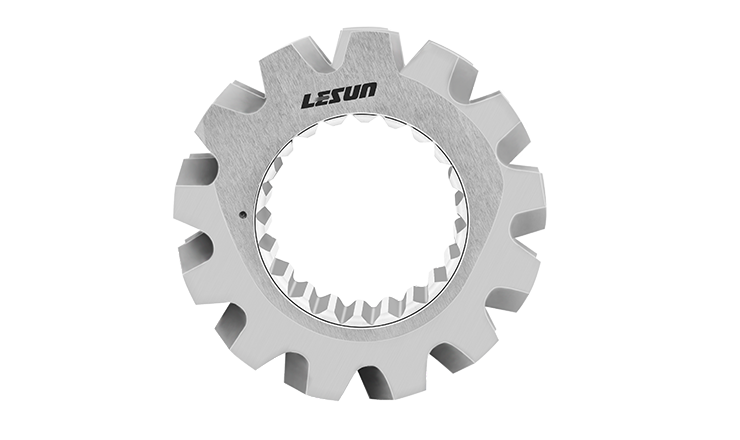
TME elements use intermeshing toothed discs to split and recombine melt flow, achieving efficient distributive mixing without conveying.
Best suited for:
Melt mixing zones
Fiber-reinforced materials
High homogeneity requirements

 Knowledge >
 Product Catalog Download >
 Who are we? >
To make it more convenient for you to obtain product quotations, please check and confirm the following information in the box below.