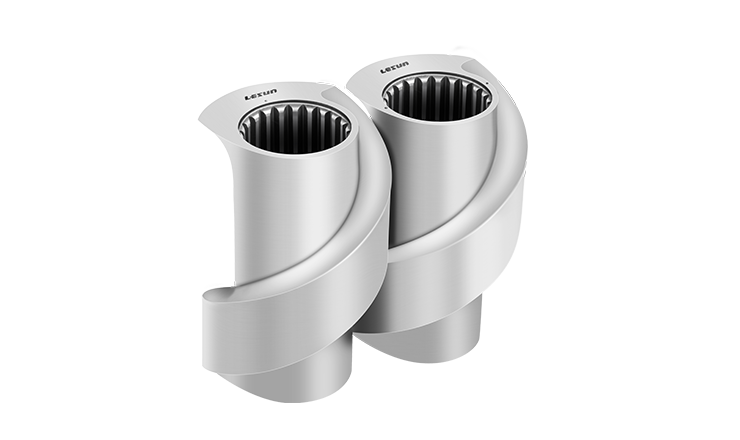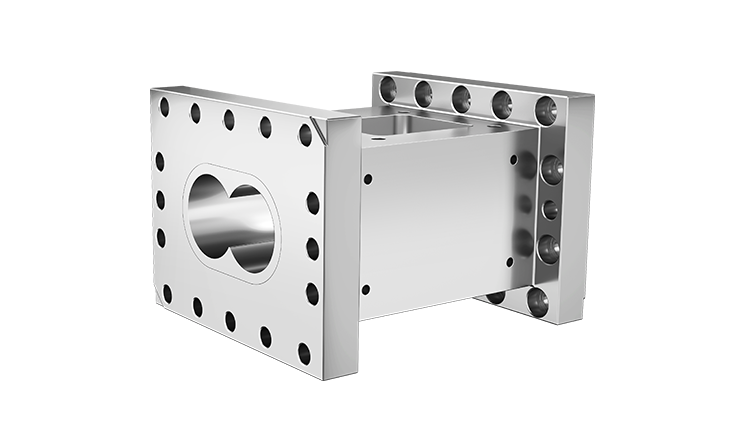
A masterbatch plant in Ningbo ran their twin screw extruder hard. The main feed throat handled resin and liquid additives fine. But the filler—40% talc by weight—had to enter downstream. They tried a single-screw side stuffer. Bridging every four hours. Dust clouds at every refill. Output stuck at 800 kg/hour when the market demanded 1,200. The problem was not the filler. It was the mismatch between side feeder design and twin screw extruder parts configuration.
Most side feeders are afterthoughts. A port drilled in the barrel. A hopper bolted on. A screw running at fixed speed. The assumption is that material will simply fall in. It does not. Fillers are low-bulk-density powders. They aerate. They bridge. They segregate by particle size. Without properly engineered twin screw extruder elements upstream of the feed point, the main screws cannot generate enough conveying capacity to pull material from the side port. Pressure backs up. The feeder chokes. Throughput collapses.
The Ningbo plant's root issue was barrel pressure. Their standard conveying screw elements created a pressure peak 200 mm before the side feed port. The filler had to fight against this back pressure to enter. Natural behavior: it refused. The solution was not a bigger feeder motor. It was reconfiguring the main screws.
We redesigned the screw sequence upstream of the side feed. Large-pitch conveying twin screw extruder elements—2D pitch instead of 1.5D—created a low-pressure zone at the feed port. A short compression section after the port built the pressure needed for downstream mixing. The side feeder itself was upgraded to a twin-screw co-rotating design with intermeshing flights that actively pushed material into the main barrel. No more bridging. No more dust. Output climbed to 1,350 kg/hour. The plant manager stopped answering emergency calls at midnight.
The critical twin screw extruder parts in side feed integration are the elements immediately before and after the port. Before: you need conveying capacity without premature compression. After: you need distributive mixing that incorporates the side-stream material without over-shearing the already-melted base polymer.
For the Ningbo talc masterbatch, we specified a sequence of 90-degree neutral kneading blocks immediately after the feed point. These blocks generate strong elongational flow that stretches the talc agglomerates into the polymer matrix. Downstream, 45-degree staggered blocks provided gentle homogenization. The final metering section used single-flight screw elements to build stable die pressure. Filter pressure values dropped 18%. Dispersion quality improved two grades on the Hegman scale.
Masterbatch margins are thin. Volume is everything. A 50% throughput increase without capital equipment investment is transformative. The Ningbo plant's side feeder upgrade cost $12,000. The annual value of additional output: $340,000. Payback period: twelve days. That is not ROI. That is a different business model.
Another customer in Dongguan processes carbon black masterbatch at 60% loading. Their challenge was not volume but heat. Carbon black absorbs shear energy and thermally degrades the polymer carrier. We integrated the side feed point later in the barrel—after 60% of the melting length—using cooled barrel sections and specialized twin screw extruder elements with reduced shear intensity. Melt temperature dropped 22°C. Output increased 35%. The customer could finally run the formulation they had been promising clients for two years.
Side feeder success depends on system thinking, not component shopping. Before specifying any twin screw extruder parts, map these parameters:
Bulk density of side-stream material at feed conditions
Required incorporation rate as percentage of total throughput
Melting completion point before side feed entry
Pressure profile along the barrel length
Venting requirements for entrained air or moisture
Get any of these wrong and the feeder becomes a bottleneck. Get them right and it becomes a force multiplier.
We do not sell side feeders as standalone products. We sell integrated systems where feeder design, barrel geometry, and screw elements configuration are optimized together. Our simulation software models pressure profiles before metal is cut. Our pilot lab validates throughput claims with your actual material. Our twin screw extruder elements are stocked for 48-hour shipment when urgency matters.
The Ningbo plant's midnight phone calls stopped. The Dongguan customer finally hit their sales targets. That is what happens when twin screw extruder parts are designed as a system, not assembled from a catalog.
At Lesun, side feed integration is not an accessory. It is a core competency that turns your extruder into the throughput machine it was meant to be.
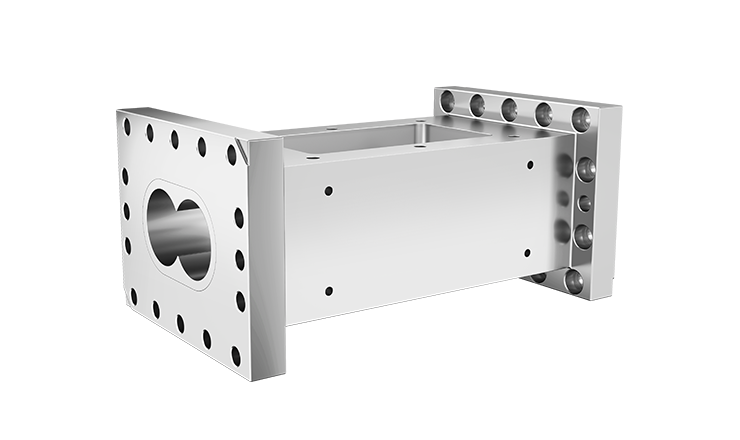
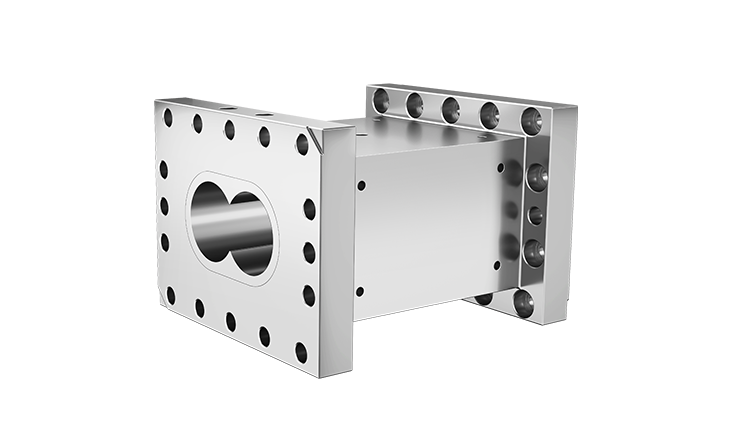
Primary feeding barrel introducing raw materials into the extruder under controlled fill and stable conveying conditions.
Best suited for:
Main material feeding
Pellet and powder input
Stable process start
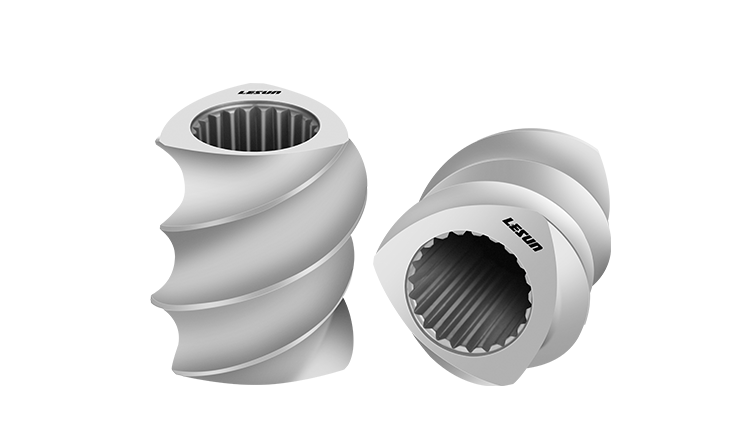
Triple flight elements provide strong distributive mixing with lower shear. They are commonly used in melt mixing sections where gentle material distribution is required.
Best suited for:
Melt distribution
Sensitive materials
Low-shear compounding
Fully enclosed barrel ensuring stable melting and pressure build-up under high fill and controlled processing conditions.
Best suited for:
Melting sections
Pressure build-up zones
Stable conveying conditions
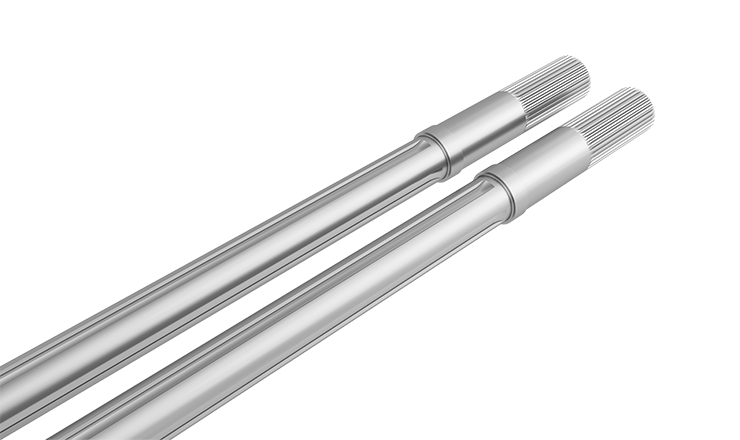
Robust rectangular spline design providing stable torque transmission with moderate load capacity.
Best suited for:
Medium torque systems
Chemical processing
Replacement applications
SSK conveying elements combine the strong conveying ability of single flight elements with increased free volume.
Best suited for:
Difficult-to-feed materials
Low-density powders and fillers
Barrel with vent openings enabling efficient removal of volatiles under controlled partial fill and pressure conditions.
Best suited for:
Devolatilization
Moisture removal
Vacuum venting sections

 Knowledge >
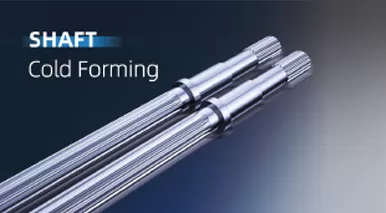
 Product Catalog Download >
 Who are we? >
To make it more convenient for you to obtain product quotations, please check and confirm the following information in the box below.