You can also ask:
· Is there comprehensive process control (rather than relying solely on FQC or OQC)?
· Are SPC or trend monitoring applied to critical dimensions/performance?
· How is traceability handled across batches (from raw materials → processing → finished product)?
Why this question matters:
· The biggest challenge with twin-screw components isn't whether they *can* be manufactured, but whether the next batch will perform just as well as the current one.
Screening logic:
· Simply stating "We have quality system certification" → Insufficient.
· Being able to clearly explain "process control methods" → Indicates a genuine system.
· Having batch traceability → Indicates excellent system implementation.
This is a question designed to test understanding regarding:
· Material composition/purity;
· Heat treatment consistency;
· Control of machining stresses and deformation.
Why it matters:
· True differentiation often lies not in the blueprints, but in the understanding of critical variables.
Screening logic:
· Vague answers (e.g., "good materials" or "good equipment") → Superficial understanding;
· Ability to identify specific "risk points" → Experienced.
This is a "reverse question" that works very well.
Why it matters:
· A mature enterprise is well aware of its own "risk points";
· An immature enterprise often simply claims, "We have no issues."
Screening logic:
· Answering "basically no issues" → Be wary;
· Able to identify specific issues + describe control methods → More credible.
Key points to look for:
· Is there a standardized problem analysis process?
· Is there cross-departmental collaboration (e.g., process engineering, design, quality control)?
· Is there a database of past cases?
Why this matters: The twin-screw industry is a sector where optimization is typically driven by problem-solving.
Evaluation criteria:
· Merely stating "we provide pre-sales and after-sales support" → Weak
· Able to articulate the analysis process (or even cite specific cases) → Strong
A truly professional answer should address:
· Increased torque → loads on the core shaft + stress concentration at splines or connection points;
· Changes in the mechanism of force transmission between screw elements;
· Premature failure caused by uneven localized loading.
If the response is simply "our materials are better," you can generally conclude that their understanding is superficial; the core issue is fatigue failure, not instantaneous strength.
Under high-torque conditions, the question isn't merely whether the part will break, but whether it can operate reliably for six months, a year, or longer.
Key points to cover include:
· Cyclic loading; · Micro-crack propagation;
· Long-term stability. Anyone who mentions "fatigue" generally knows what they are talking about.
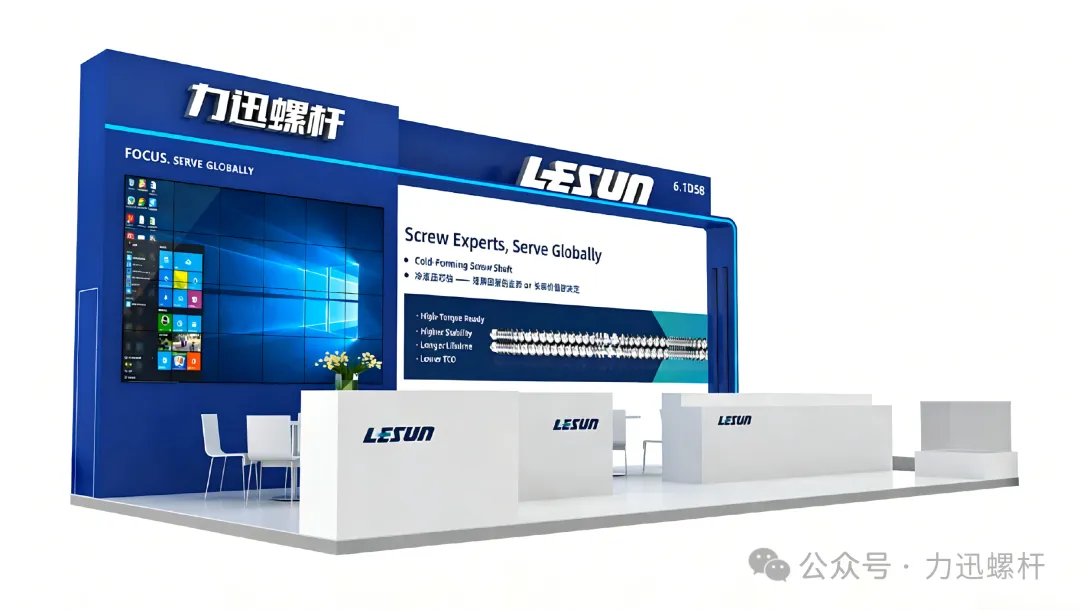
Exhibition Details:
· Exhibition Name: Chinaplas 2026 (The International Exhibition on Plastics and Rubber Industries)
· Dates: April 21–24, 2026
· Venue: National Exhibition and Convention Center (Shanghai, Hongqiao)
· Our Booth: Hall 6.1, Booth D58
Neutral kneading elements provide strong mixing with minimal conveying effect, ensuring stable residence time and high mixing efficiency.
Best suited for:
High mixing zones
Sensitive formulations
Residence time control
Forward kneading elements provide a balance between conveying and mixing, with adjustable shear depending on stagger angle and disc width.
Best suited for:
Plastication zones
General compounding
Controlled mixing processes
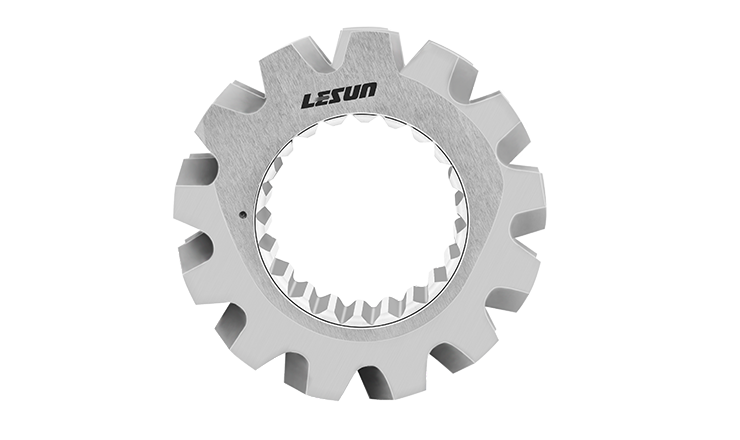
ZME elements combine reverse conveying structure with forward teeth, creating intensive cutting and recombination of melt flow.
Best suited for:
High mixing intensity applications
Difficult-to-disperse materials
High-performance compounding
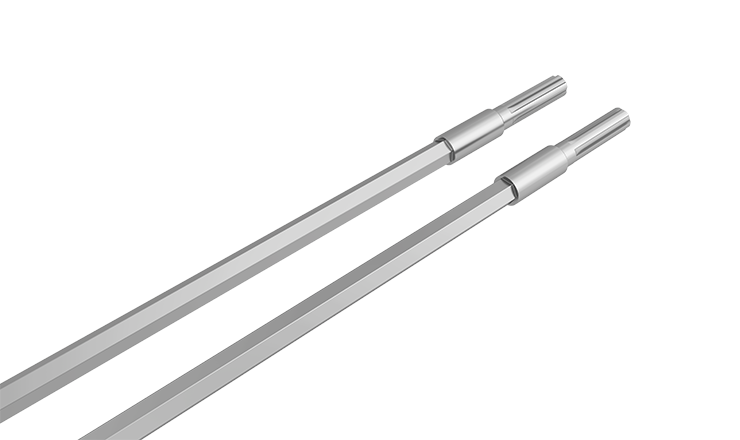
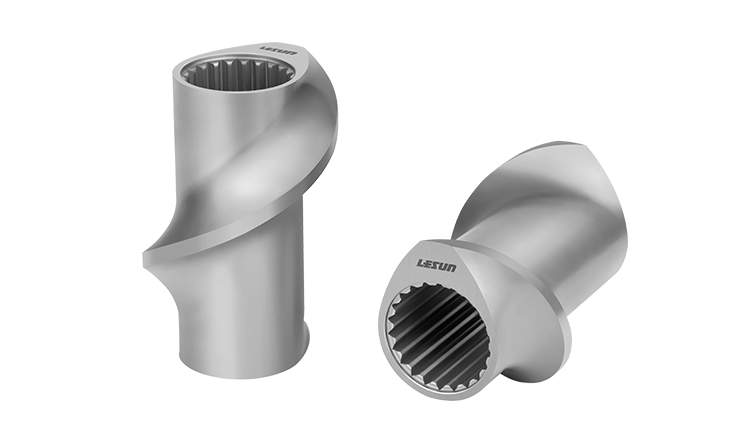
Six-sided geometry enabling uniform torque transfer and rapid screw element replacement.
Best suited for:
Powder coating
Frequent material changes
Fast screw configuration changes
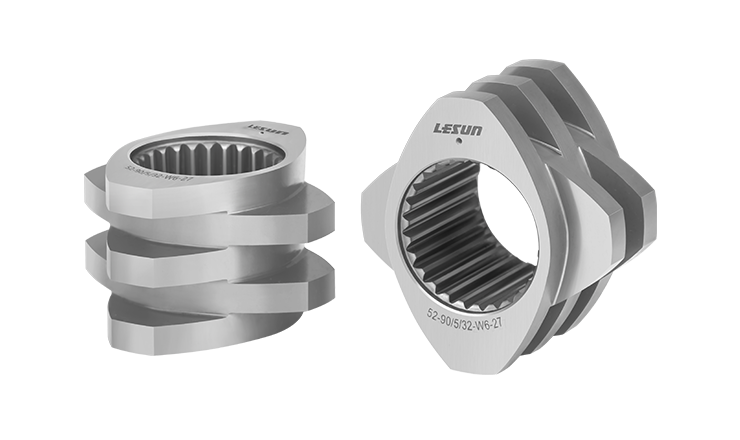
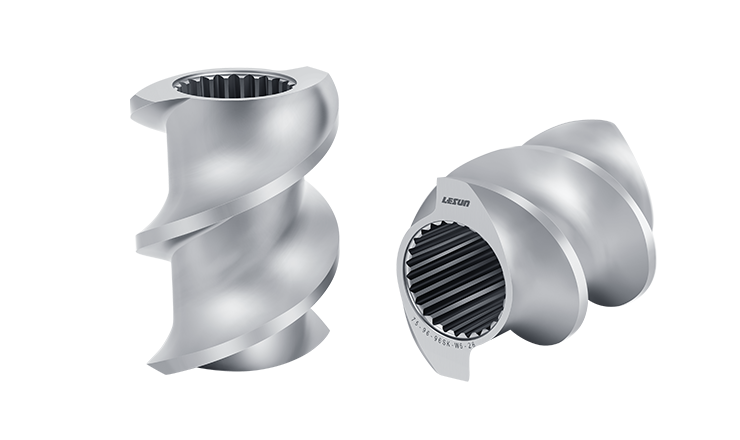
Single flight conveying elements provide higher conveying efficiency than standard double flight elements. Their wider flight design reduces leakage flow and increases pressure-building capability.
Best suited for:
Feeding sections
Extrusion zones
Applications requiring strong conveying force
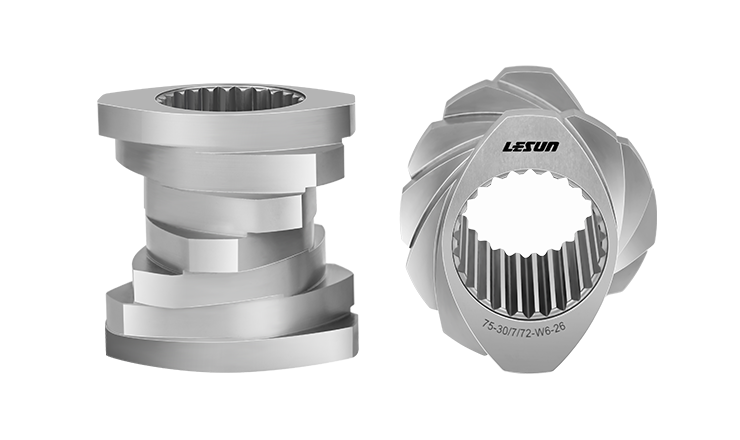
SK conveying elements provide approximately 15% higher free volume than standard conveying elements and are particularly suitable for low bulk density materials.
Best suited for:
Feeding zones
Side feeding
Low bulk density materials

 Knowledge >
 Product Catalog Download >
 Who are we? >
To make it more convenient for you to obtain product quotations, please check and confirm the following information in the box below.