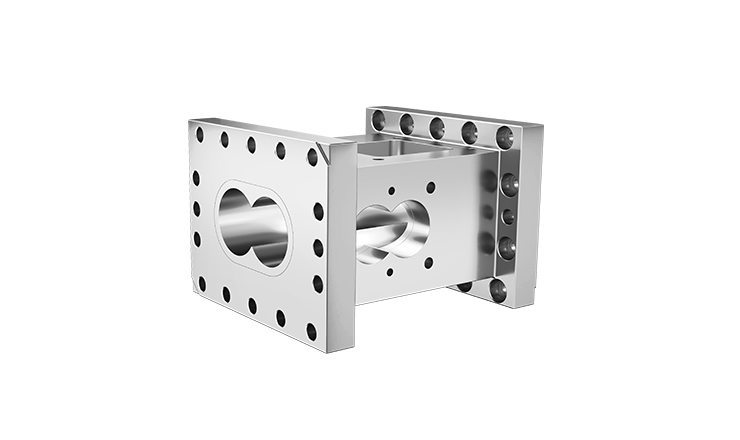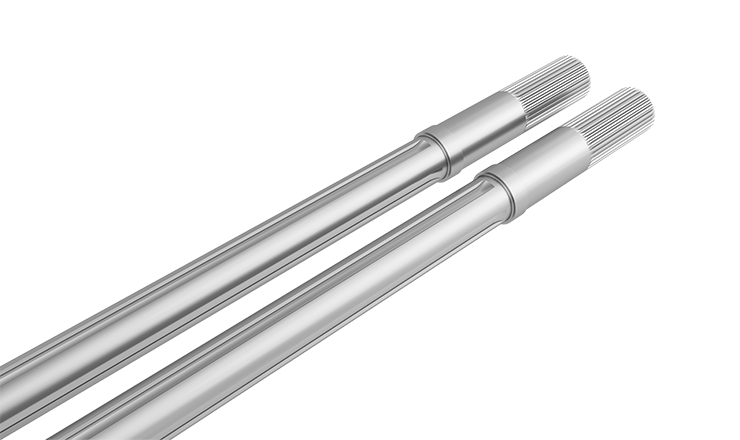


High-filler formulations such as calcium carbonate (CaCO₃), talc, glass fiber (GF), and mineral-filled compounds are widely used to reduce material costs and enhance product performance.
However, these formulations also create one of the most challenging operating environments for co-rotating twin-screw extruders.
Compared with unfilled polymers, high-filler compounds often cause significantly faster wear of screw elements and barrels, leading to:
Reduced component lifetime
Higher maintenance costs
Increased downtime
Unstable process performance
Lower production efficiency
Understanding the mechanisms behind screw wear is the first step toward improving equipment reliability and reducing total operating costs.
The primary reason is simple:
The filler particles themselves become abrasive media inside the extrusion system.
Unlike polymer melts, inorganic fillers are hard particles that continuously interact with screw flights, barrel liners, and kneading elements under pressure and shear.
As filler concentration increases, the number of abrasive particle contacts rises dramatically.
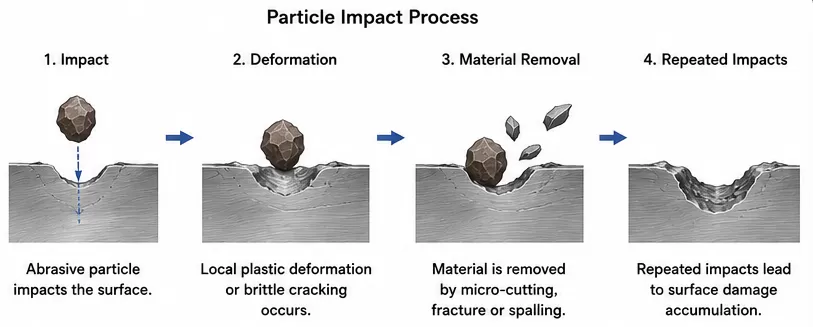
The result is accelerated material removal from critical processing components.
This effect becomes increasingly severe when filler loading exceeds:
40–50% CaCO₃
30–40% Glass Fiber
High mineral masterbatch formulations
Wood-plastic and highly filled recycled compounds
Although wear appears as a single problem, it is typically caused by several mechanisms acting simultaneously.
Abrasive wear is the dominant failure mode in most high-filler applications.
Hard particles trapped between metal surfaces act like microscopic cutting tools.
During screw rotation, these particles continuously:
Scratch component surfaces
Remove protective material layers
Gradually enlarge clearances
This mechanism is particularly severe with:
Calcium carbonate
Talc
Glass fiber
Mineral fillers
Recycled materials containing contaminants
The higher the filler concentration, the greater the abrasive effect.
At high screw speeds, particles can strike metal surfaces repeatedly.
This phenomenon is known as erosive wear.
Areas exposed to directional material flow are especially vulnerable, including:
Screw flight edges
Kneading block corners
Transition sections
Barrel inlet zones
Over time, erosive wear alters the original geometry of screw elements and reduces processing efficiency.
Although less significant than abrasion, adhesive wear and surface fatigue may also occur.
These mechanisms are often associated with:
Excessive torque loading
High operating temperatures
Localized pressure peaks
Poor lubrication conditions within the polymer melt
The combination of multiple wear mechanisms often accelerates overall component degradation.
Wear is rarely distributed evenly across the extrusion system.
In high-filler applications, the most heavily loaded areas are typically:
Incoming filler particles are still in solid form and generate intense friction against screw flights and barrel surfaces.
These zones experience the highest shear stresses and particle interactions.
Aggressive kneading configurations often become the primary wear hotspots.
High pressure and compacted filler concentrations increase contact forces between particles and metal surfaces.
These areas often experience progressive dimensional loss over time.
Many processors assume wear is determined solely by filler type.
In reality, screw configuration plays a major role.
Poorly designed screw layouts can dramatically increase wear rates by creating:
Excessive shear intensity
Localized pressure spikes
Material stagnation zones
Unnecessary mechanical energy input
A well-designed configuration distributes stress more evenly throughout the process section.
The goal is not simply to maximize mixing, but to achieve the required dispersion with the lowest practical mechanical loading.
[How to Design Screw Elements for High Filler Compounds → INSERT LINK: Insight Article]
The most effective approach is often configuration optimization.
Key design principles include:
Controlled shear profiles
Balanced conveying and mixing sections
Efficient distributive mixing
Avoidance of excessive kneading intensity
Proper configuration can significantly reduce localized wear while maintaining product quality.
Process parameters directly influence wear rates.
Critical factors include:
Screw speed
Throughput rate
Melt temperature
Specific mechanical energy (SME)
Operating outside the optimal process window can dramatically shorten component life.
Wear-resistant screw systems are commonly used in:
Calcium carbonate masterbatch production
Glass fiber reinforced compounds
Talc-filled polypropylene
Engineering plastics compounding
Wood-plastic composites (WPC)
Recycled plastics processing
Mineral-filled polyethylene and polypropylene compounds
These applications often justify advanced wear protection solutions due to the high cost of downtime and replacement components.
High-filler materials accelerate screw wear because hard particles continuously interact with screw and barrel surfaces under conditions of pressure, shear, and high throughput.
While filler type is a major factor, wear performance is also strongly influenced by:
Screw configuration design
Processing conditions
Component material selection
By combining optimized screw geometry, controlled shear management, and wear-resistant material systems, processors can significantly extend screw and barrel life while maintaining stable compounding performance.
WhatsApp: 8613605142173
Mail: sales@lesunscrew.com
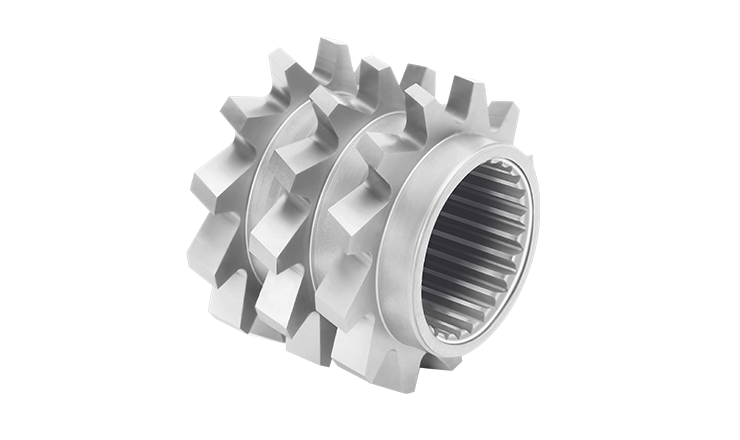
TME elements use intermeshing toothed discs to split and recombine melt flow, achieving efficient distributive mixing without conveying.
Best suited for:
Melt mixing zones
Fiber-reinforced materials
High homogeneity requirements
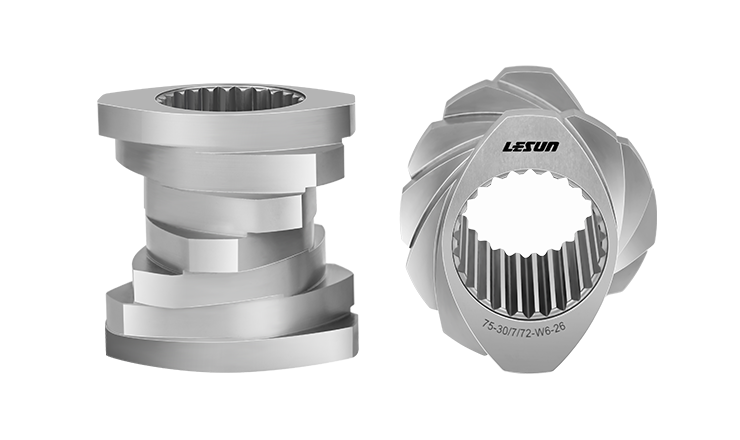
Forward kneading elements provide a balance between conveying and mixing, with adjustable shear depending on stagger angle and disc width.
Best suited for:
Plastication zones
General compounding
Controlled mixing processes
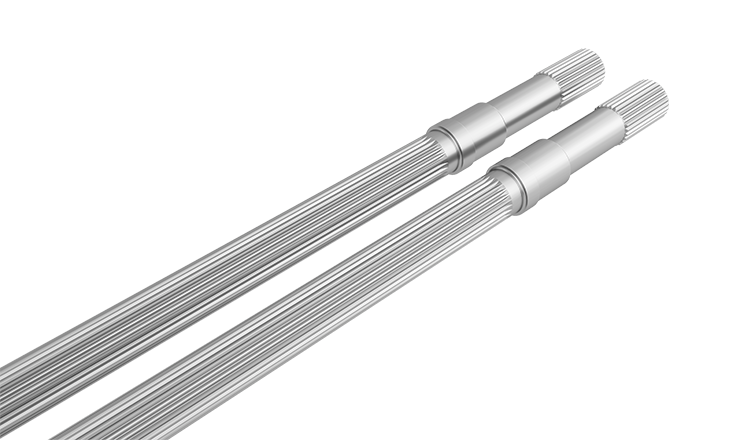
Precision involute spline ensuring high torque transmission with accurate centering and load distribution.
Best suited for:
High torque extrusion
Engineering plastics
Masterbatch production
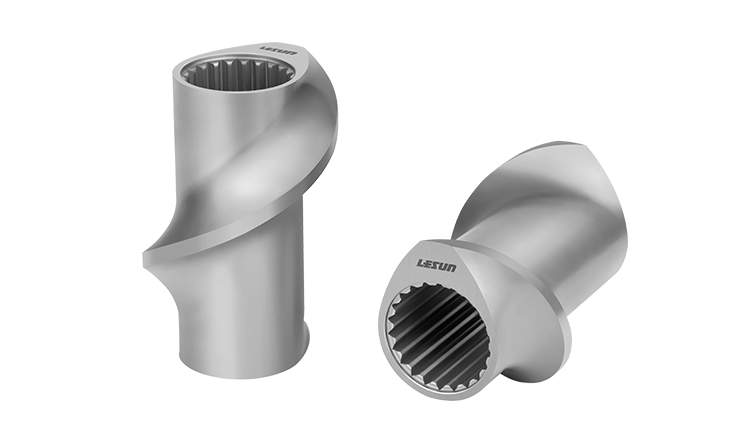
Single flight conveying elements provide higher conveying efficiency than standard double flight elements. Their wider flight design reduces leakage flow and increases pressure-building capability.
Best suited for:
Feeding sections
Extrusion zones
Applications requiring strong conveying force
Barrel with side feeding port for controlled addition of fillers, fibers or additives during processing.
Best suited for:
Fiber reinforcement
Filler addition
Multi-component compounding
Robust rectangular spline design providing stable torque transmission with moderate load capacity.
Best suited for:
Medium torque systems
Chemical processing
Replacement applications

 Knowledge >
 Product Catalog Download >
 Who are we? >
To make it more convenient for you to obtain product quotations, please check and confirm the following information in the box below.